Precision Sheet Metal Fabrication Engineer in Orange County: Your Full-Service Custom Metal Fabrication Engineer in CA
Finding the right metal fabrication engineer in Orange County or LA County can transform your project from concept to reality. Whether you need precision CNC machining, custom metal fabrication, or comprehensive sheet metal fabrication services, IDDO Construction’s metal fabrication shop offers cutting-edge solutions for businesses across Southern California. We will explore everything you need to know about metal fabrication services in Orange and LA Counties, from understanding the fabrication process to selecting the right fabrication company for your specific needs. You’ll discover how IDDO’s skilled fabricators use the latest technology to deliver high-quality metal products, learn about various welding services and powder coating options, and understand why Orange and LA Counties have become a hub for precision sheet metal fabrication excellence. Contact us to get started today.
What Is Metal Fabrication and Why Does It Matter for Your Business?
Metal fabrication is the comprehensive process of transforming raw metal materials into finished products through cutting, bending, welding, and assembly. This manufacturing process encompasses everything from creating simple brackets to designing and fabricating complex structural components that meet exact specifications. For businesses throughout such as IDDO Construction, metal fabrication combined with engineering offers the flexibility to create custom solutions tailored to unique operational requirements.
The importance of metal fabrication engineering in Orange County extends across virtually every industry. From aerospace and automotive to construction and food service, fabricated metal parts form the backbone of modern infrastructure and commerce. A skilled metal fabricator can take your concept drawings and transform them into durable, functional components that withstand demanding environments and deliver long-lasting performance.
Understanding metal fabrication means recognizing that it’s not a one-size-fits-all service. The fabrication process varies significantly based on materials (aluminum, stainless steel, brass, wrought iron), project complexity, and intended application. This versatility makes metal fabrication an essential service for companies seeking to innovate and compete effectively in their markets.
How Do Custom Metal Fabrication Services Work in Orange County?
As a metal fabrication engineer in Orange County we start with a detailed consultation where fabricators assess your project requirements, specifications, and timeline expectations. A reputable fabrication company will work closely with you to understand the structural integrity needs, tolerance requirements, and aesthetic preferences for your metal products. This collaborative approach ensures that the final product aligns perfectly with your vision and functional demands.
The custom fabrication process typically involves several stages. First, engineers create detailed CAD drawings and prototypes to validate the design concept. Next, the manufacturing facility selects appropriate materials—whether stainless steel for corrosion resistance, aluminum for lightweight applications, or other specialized alloys. The actual fabrication then proceeds through precision cutting (laser cutting, plasma, or waterjet), forming operations to bend and shape the metal, and welding to join components securely.
Orange County metal shops distinguish themselves through their ability to handle both small prototype runs and large-scale production orders. Many operate as full-service solutions providers, offering everything from initial design consultation through final installation and shipment. This comprehensive approach streamlines the production process, reduces lead times, and ensures consistent quality throughout every fabrication project.
What Types of Metal Fabrication Services Are Available in OC?
The metal fabrication services landscape in Orange County encompasses an impressive range of capabilities. Precision CNC machining represents one cornerstone service, utilizing computer-controlled equipment and skilled operators to create components with incredibly tight tolerances. CNC machines can mill, drill, turn, and route metal with accuracy measured in thousandths of an inch, making them ideal for applications requiring exact specifications.
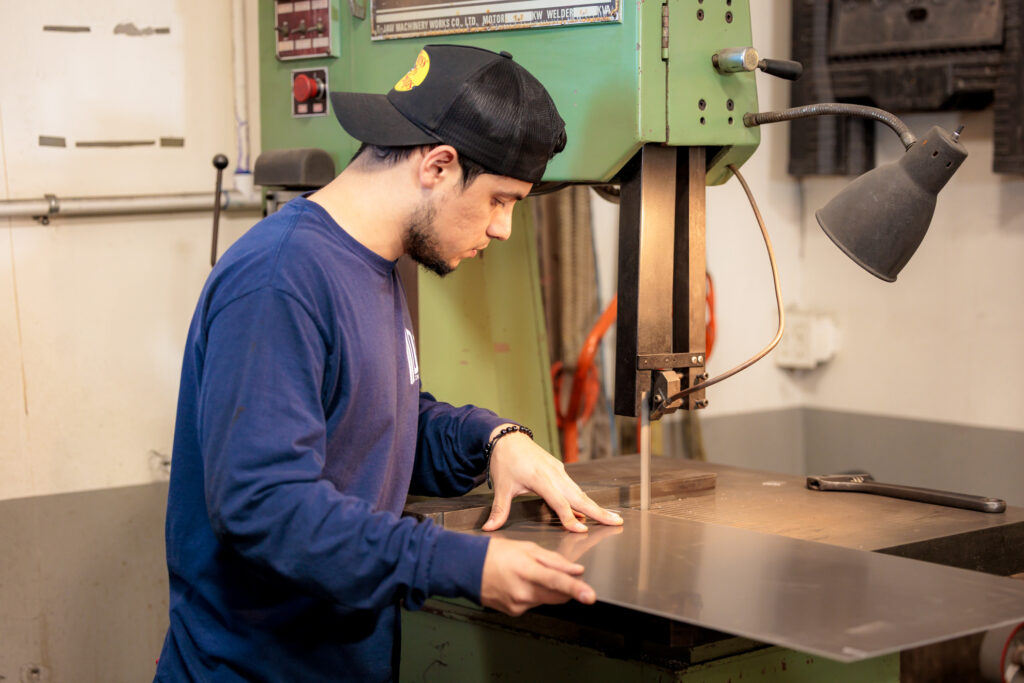
Sheet metal fabrication constitutes another major service category, involving the cutting, bending, and forming of flat metal sheets into three-dimensional shapes. This process is essential for creating enclosures, panels, brackets, chassis, and architectural elements. Many Orange County metal works facilities combine traditional sheet metal techniques with advanced laser cutting technology to achieve both precision and efficiency.
Beyond these core services, many fabrication companies in CA offer specialized capabilities including welding services (MIG, TIG, spot welding), metal finishing options like powder coating for enhanced durability and appearance, and custom solutions for unique applications. Some facilities also serve as contract manufacturers, providing ongoing production support for companies that need consistent supplies of fabricated components. This diversity of services enables businesses to find a single supplier capable of handling their complete metal fabrication needs.
How Do You Choose the Right Metal Fabrication Company in Anaheim and Orange County?
Selecting the right metal fabrication engineer in Orange County requires careful evaluation of several critical factors. First, assess the company’s technical capabilities and machinery. A state-of-the-art manufacturing facility equipped with the latest technology—including modern CNC equipment, precision laser cutting systems, and advanced welding stations—demonstrates a commitment to quality and efficiency. Visit the facility if possible to observe their operations and equipment firsthand.
Experience and specialization matter significantly in metal fabrication. Look for a metal fabrication company with proven expertise in your industry and project type. Review their portfolio of completed metal fabrication projects to ensure they’ve successfully handled work similar in complexity and scale to your requirements. Don’t hesitate to request references from previous clients to verify their reliability and workmanship quality.
Certifications and quality standards provide important reassurance about a fabricator’s processes and accountability. ISO certification, for instance, indicates adherence to internationally recognized quality management systems. Additionally, consider practical factors like turnaround time, communication responsiveness, and pricing transparency. The best fabrication partners balance competitive pricing with exceptional quality products and reliable delivery schedules that respect your project timeline.
What Materials Can Be Used for Custom Metal Fabrication Projects?
Material selection forms a crucial decision in any fabrication project, as different metals offer distinct properties suited to specific applications. Stainless steel remains one of the most popular choices, valued for its corrosion resistance, strength, and attractive appearance. This versatile material works well for food service equipment, medical devices, architectural features, and outdoor installations where weather resistance is essential.
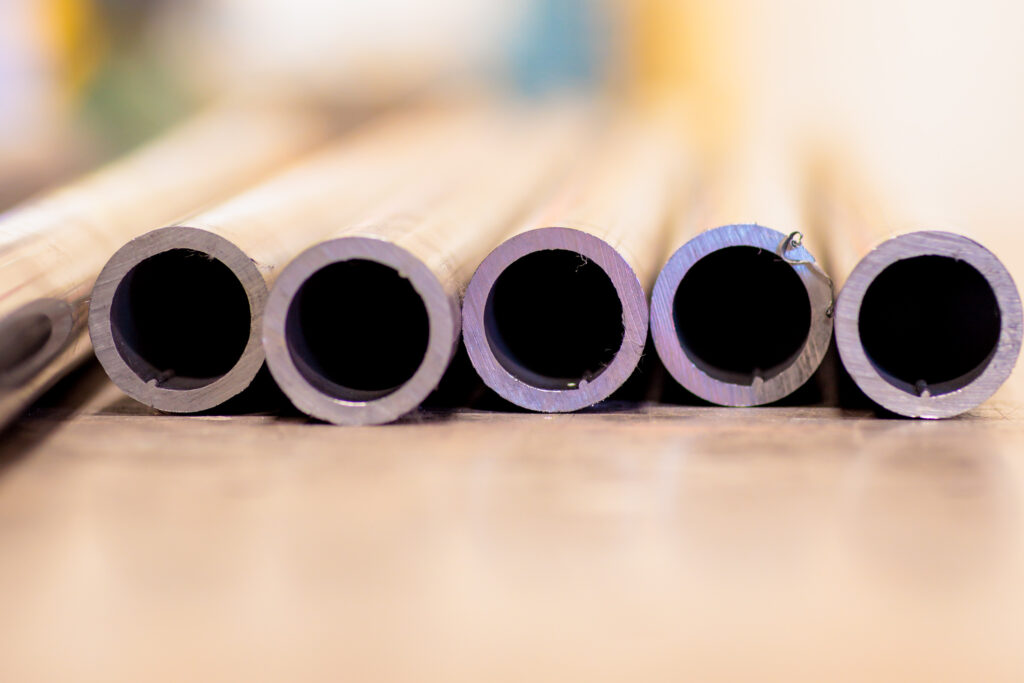
Aluminum represents another frequently specified material, particularly when weight reduction matters. Its excellent strength-to-weight ratio makes aluminum ideal for aerospace components, transportation applications, and structures where minimizing mass improves performance or reduces installation complexity. Aluminum also offers good corrosion resistance and can be finished with powder coating or anodizing for enhanced protection and aesthetics.
Beyond these common options, skilled metal fabricators can work with numerous other materials including carbon steel for structural applications, brass for decorative elements and specialized industrial uses, copper for electrical and thermal applications, and various specialty alloys engineered for extreme environments. The choice depends on factors including mechanical requirements, environmental exposure, aesthetic considerations, budget constraints, and manufacturing considerations. A knowledgeable fabricator will guide you through material selection to optimize performance and cost-effectiveness.
What Advanced Technologies Are Used in Modern Metal Fabrication?
Modern metal fabrication has been revolutionized by cutting-edge technologies that deliver unprecedented precision and efficiency. Laser cutting systems represent perhaps the most transformative advancement, using focused laser beams to cut intricate patterns and complex geometries with minimal material waste and extraordinary accuracy. These systems can process various metals and thicknesses, making them versatile tools for both prototype development and production runs.
Computer Numerical Control (CNC) machining brings digital precision to traditional metalworking operations. Precision CNC equipment translates CAD designs directly into physical components, eliminating human error and ensuring perfect repeatability across production batches. Advanced CNC machines can perform multiple operations—milling, drilling, tapping, boring—in a single setup, reducing handling time and maintaining tighter tolerances throughout the fabrication process.
Plasma cutting technology provides another powerful capability, particularly for thicker materials where laser cutting becomes less economical. Plasma systems use electrically ionized gas to cut conductive metals quickly and cleanly. Many Orange County metal fabrication shops combine these technologies with traditional techniques like press brake forming, roll bending, and manual welding services to create a comprehensive manufacturing capability that can tackle any challenge from simple components to complex assemblies.
How Does the Sheet Metal Fabrication Process Work?
Precision sheet metal fabrication begins with flat metal stock, typically delivered in standard sheet sizes. The process starts with cutting operations to create the basic blank shape from which the final part will be formed. Depending on the complexity and quantity required, this cutting might be accomplished through laser cutting for intricate patterns, shearing for straight cuts, or punching for repetitive hole patterns and simple shapes.
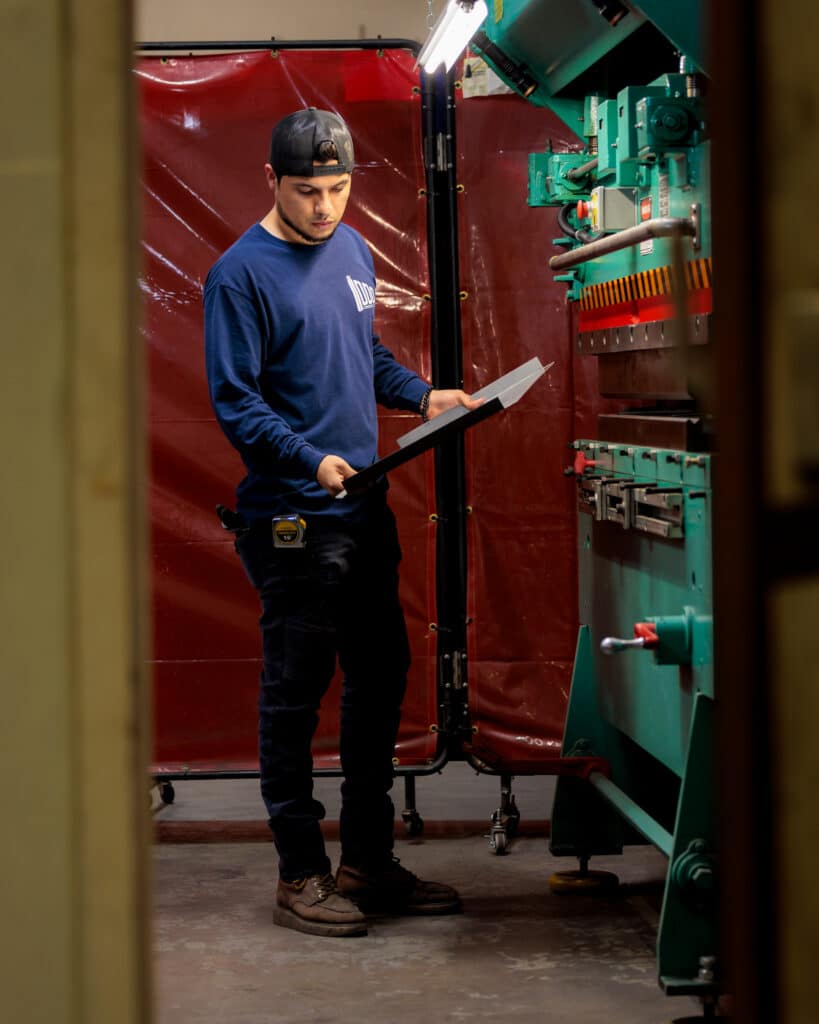
Once cut to approximate shape, the metal undergoes forming operations to create bends, curves, and three-dimensional geometry. Press brakes represent the most common forming tool, using precisely controlled force to bend sheet metal along predetermined lines. The accuracy of these bends depends on factors including material type and thickness, tooling selection, and the skill of the operator. Modern press brakes often incorporate CNC controls that ensure consistent angle and dimension across multiple parts.
After forming, sheet metal components may require additional operations including welding to join multiple pieces, deburring to remove sharp edges, hardware installation to add fasteners or inserts, and surface finishing. Many fabrication companies offer powder coating as a final step, applying a durable, attractive protective layer that enhances both appearance and longevity. The complete sheet metal fabrication process requires coordination between multiple departments and careful quality control to ensure every part meets specification before shipment.
What Finishing Options Enhance Metal Products?
Metal finishing encompasses various processes that protect fabricated components while enhancing their appearance. Powder coating stands as one of the most popular finishing methods, involving the electrostatic application of dry powder that’s then cured in an oven to create a hard, protective coating. This finish offers excellent durability, chemical resistance, and a wide range of colors and textures. Powder coating provides superior performance compared to traditional liquid paints, making it ideal for both industrial and decorative applications.
Beyond powder coating, metal finishing options include various plating processes that apply thin layers of other metals (zinc, chrome, nickel) to enhance corrosion resistance or appearance. Anodizing represents a specialized finishing technique primarily used with aluminum, creating a durable oxide layer that can be dyed various colors while maintaining the metal’s natural texture. For applications requiring maximum corrosion protection, hot-dip galvanizing immerses steel components in molten zinc to create a robust barrier against rust.
Surface preparation before coating is equally important to the final result. Professional fabricators employ sandblasting, grinding, or chemical cleaning to remove oils, oxides, and contaminants that could compromise coating adhesion. Some projects require specific surface textures or finishes—brushed, polished, or textured—achieved through mechanical finishing processes. The right combination of surface preparation and protective coating ensures metal products maintain their appearance and functionality throughout their intended service life.
What Are the Benefits of Working With a Full-Service Metal Fabrication Provider?
Partnering with a metal fabrication engineer in Orange County offers significant advantages over managing multiple specialized vendors. Consolidating your project with a single solutions provider streamlines communication, eliminates coordination challenges between different contractors, and reduces the administrative burden of managing multiple relationships. When one company handles design, fabrication, finishing, and installation, accountability becomes clear and problem-solving happens faster.
Full-service capabilities also accelerate project timelines and reduce costs. When design engineers, fabricators, welders, and finishers work under one roof, information flows seamlessly between departments without delays for shipping, scheduling, or technical translation between vendors. This integration allows for design optimization suggestions based on fabrication realities, potentially identifying cost savings or performance improvements that wouldn’t emerge in a fragmented workflow. Additionally, eliminating markup from multiple vendors typically results in more competitive overall pricing.
Quality consistency represents another compelling advantage of full-service providers. When a single metal fabrication company maintains oversight from initial concept through final delivery, quality standards remain consistent throughout the production process. The company’s reputation depends on every aspect of the project, creating strong incentive to maintain excellence at each stage. For businesses seeking reliable partners who can handle everything from one-off prototypes to ongoing production as a contract manufacturer, full-service fabrication companies provide the comprehensive capabilities and accountability that complex projects demand.
How Can Metal Fabrication Support Your Specific Industry Needs?
Different industries place unique demands on metal fabrication, requiring specialized knowledge and capabilities. The construction and architectural sectors, for example, need structural components that meet strict building codes while potentially serving decorative functions. Fabricators serving these markets must understand load-bearing calculations, weather resistance requirements, and aesthetic considerations. They often work with materials like stainless steel for railings, wrought iron for gates, and custom sheet metal for building facades and roofing systems.
Manufacturing and industrial clients require precision metal parts that integrate into larger assemblies or machinery. These applications often demand tight tolerances, specific material properties, and consistent quality across production runs. A metal fabricator serving this sector must demonstrate process control, inspection capabilities, and the flexibility to fabricate both prototypes for testing and full production quantities. Many manufacturers value fabrication partners who can serve as reliable suppliers, delivering components on predictable schedules that support just-in-time production strategies.
Service industries including food service, healthcare, and retail have their own distinct requirements. Food service equipment demands easy-to-clean surfaces, often requiring stainless construction and specific sanitary design features. Medical applications may require biocompatible materials and compliance with regulatory standards. Retail fixtures need attractive finishes and designs that align with brand aesthetics while remaining durable under customer interaction. Understanding these sector-specific needs allows experienced fabrication companies to tailor their approach, recommending appropriate materials, finishes, and construction methods that optimize performance for each application’s unique environment.
Key Takeaways
Essential Points to Remember About Metal Fabrication in Orange County:
Comprehensive capabilities matter: Look for full-service metal fabrication providers in Orange County who can handle your project from design through installation, eliminating coordination headaches and ensuring quality consistency
Technology drives quality: Modern fabrication companies invest in precision CNC machining, laser cutting, and advanced welding equipment to deliver components that meet exact specifications with minimal tolerance variation
Material selection is critical: Working with a knowledgeable metal fabricator helps you choose the right material—whether stainless steel, aluminum, brass, or specialty alloys—based on your application’s mechanical, environmental, and budgetary requirements
Finishing enhances performance: Protective coatings like powder coating dramatically extend the life of fabricated metal products while providing attractive, customizable appearances that align with your aesthetic goals
Industry expertise adds value: Fabrication companies with experience in your specific sector understand the unique challenges and requirements you face, from regulatory compliance to performance standards
Location advantages: Working with Orange County metal fabrication services in Orange County, CA provides proximity advantages for site visits, faster communication, reduced shipping costs, and easier collaboration throughout your fabrication project
Quality certifications matter: ISO certification and other quality standards indicate a fabrication company’s commitment to process control, documentation, and consistent delivery of high-quality metal solutions
Scalability supports growth: The best metal fabrication partners can handle everything from single prototypes to large-scale production runs, growing with your needs as projects evolve from concept to full manufacturing
Lead times impact planning: Discuss turnaround expectations early in the process, understanding that custom fabrication requires appropriate time for design validation, material procurement, and careful manufacturing to deliver products that meet your structural integrity and performance requirements
Partnership approach wins: The most successful fabrication projects result from collaborative relationships where the metal fabrication engineer in Orange County or LA County functions as a true solutions provider, contributing technical expertise and manufacturing insights that optimize your designs for both performance and producibility